Walk-on Glass Rooflights

Load-bearing glass floor panels and rooflights engineered for foot traffic — delivering natural light to basement spaces, lightwells and lower levels while providing a safe, slip-resistant walking surface above.

Home / Architectural Glazing / Walk-on Glass Rooflights

Engineered for Light and Load

Walk-on glass rooflights serve a dual purpose: they are structural floor panels that bear the weight of foot traffic from above while functioning as rooflights that deliver natural light to the spaces below. This dual-function glazing is essential for basement conversions, lightwells, terraces above habitable rooms and garden-level walkways over lower-ground spaces — applications that are increasingly common across Surrey and London's premium residential properties.

The engineering requirements for walk-on glass are significantly more demanding than standard rooflights. Every panel must be designed to withstand the uniformly distributed loads (UDL) specified in BS EN 1991-1-1:2002 — a minimum of 1.5 kN/m² for domestic applications, rising to 4.0 kN/m² for commercial and public areas. The glass itself must be a laminated safety assembly, typically comprising three panes of toughened glass bonded with structural interlayers, to ensure that if any single pane fails, the remaining structure maintains its load-bearing capacity.

We design every walk-on glass panel to your project's specific loading requirements, with full structural calculations verified by an independent engineer. The upper surface receives an anti-slip treatment — typically sandblasting or ceramic frit application — tested to BS 7976-2 to ensure safe walking in both dry and wet conditions.

  • Minimum 25.5mm toughened laminated glass for domestic use
  • 31.5mm–33.5mm assemblies for larger panels and higher loads
  • 1.5 kN/m² UDL for domestic (BS EN 1991-1-1:2002)
  • 4.0 kN/m² UDL for commercial applications
  • Anti-slip surface treatment to BS 7976-2
  • Fail-safe laminated construction — maintained integrity if one pane breaks
  • Full structural calculations by independent engineer

Walk-on glass rooflights are a bespoke, architect-specified investment. The glass assembly, support frame, waterproofing and drainage must be designed as an integrated system, and we produce AutoCAD detailed drawings for every installation. Popular applications across our Surrey and London service area include terrace panels above basement kitchens, garden walkways over lightwells, and flush-mounted pavement lights for commercial frontages.
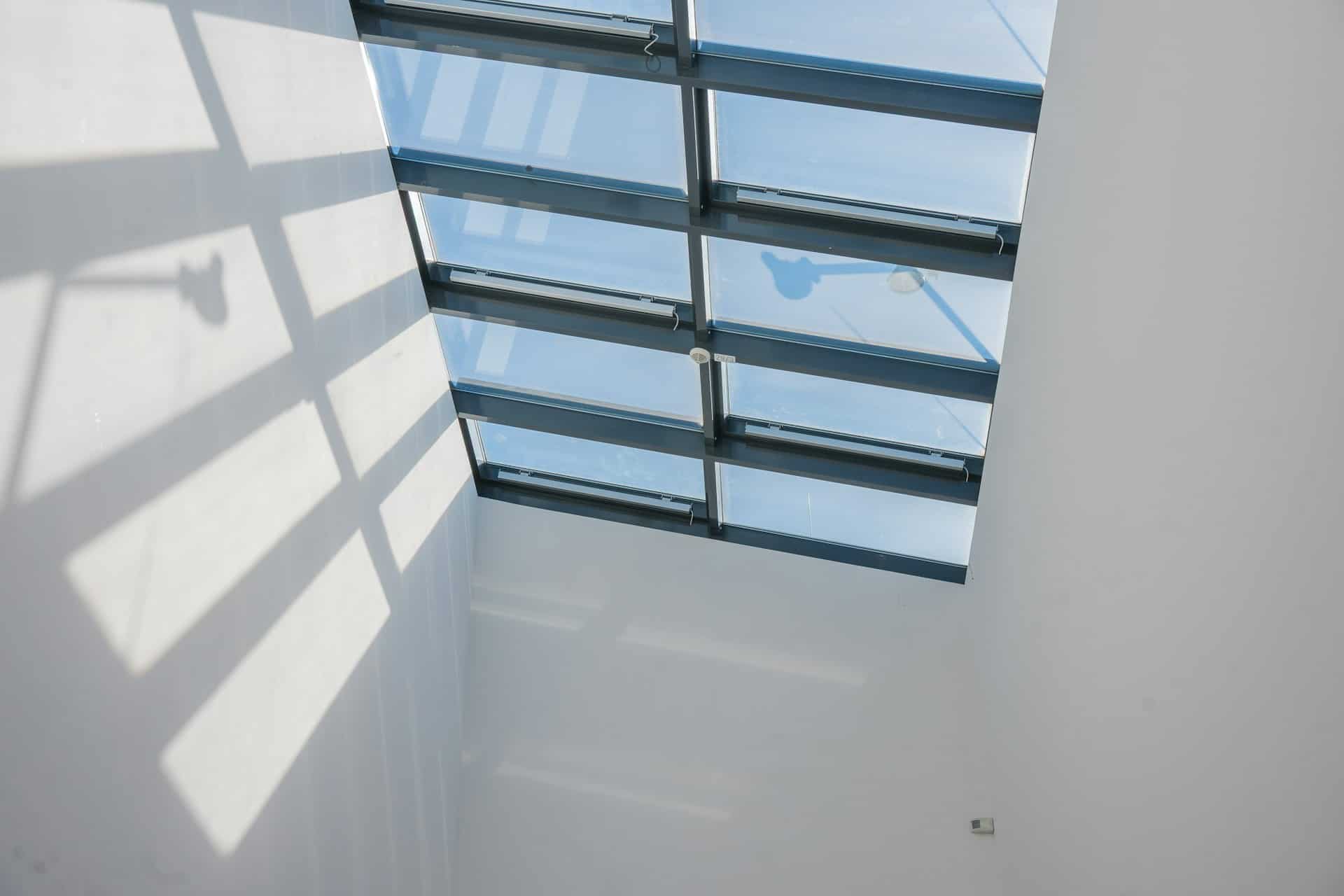
Skylight with metal framing allowing natural light to brighten the interior space.

Applications Across Surrey and London

Basement Light Wells — The most common application. Walk-on glass panels replace traditional metal grilles or solid covers over basement lightwells, transforming a dark subterranean space into a naturally lit room. Particularly valuable for basement conversions in Victorian and Edwardian properties across London and Surrey.

Terrace and Patio Panels — Glass panels set flush into an external terrace or patio, delivering light to rooms below. Ideal for properties with lower-ground-floor living spaces that benefit from overhead natural light.

Internal Floor Panels — Walk-on glass set into an upper floor to bring light down through the building. Creates a dramatic visual connection between floors while distributing natural light to the interior.

Roof Terrace Rooflights — Flush-mounted glass panels in a roof terrace that function as rooflights for the rooms directly below. Combines the amenity of a usable roof terrace with natural light for upper-floor rooms.
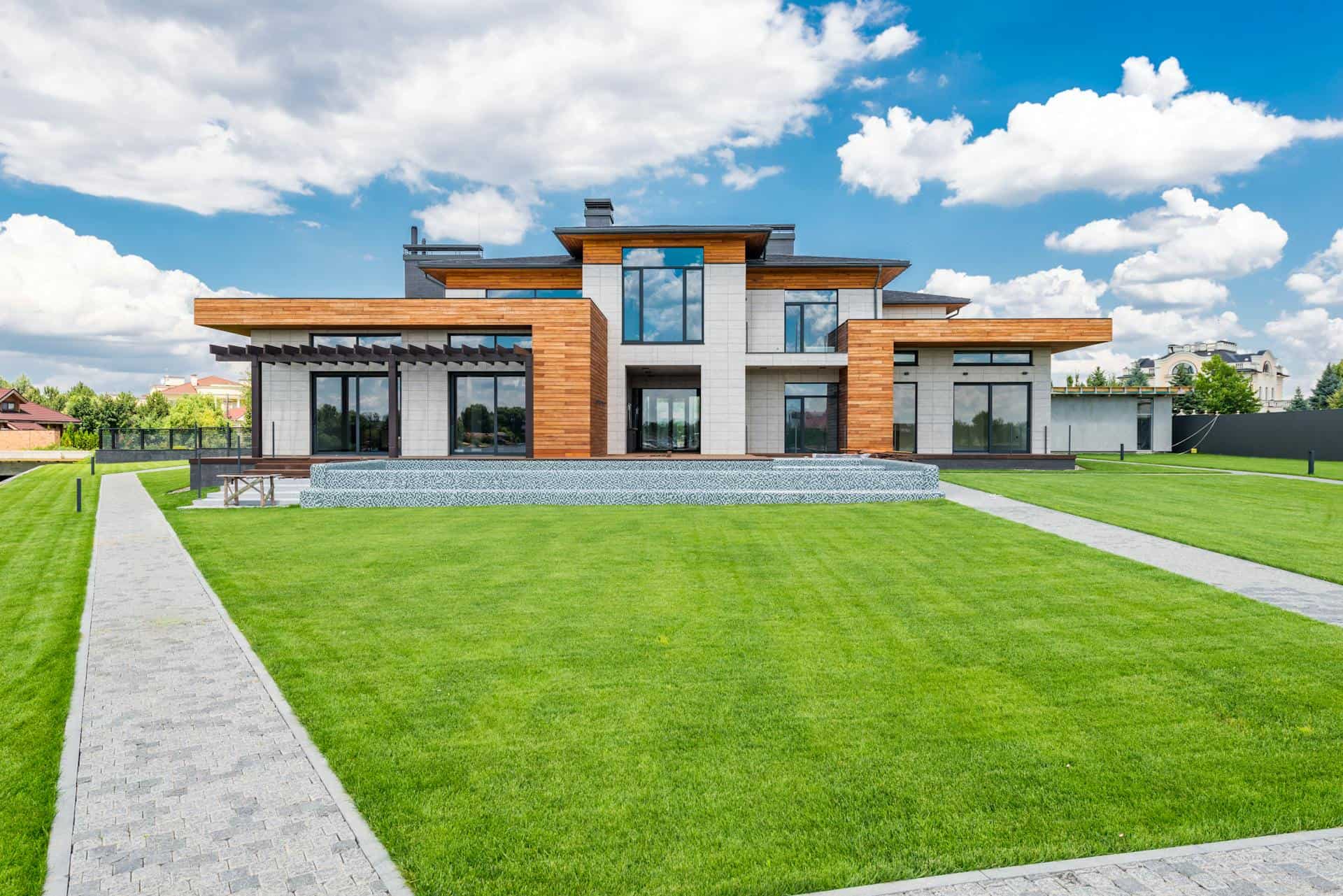
Skylight with metal framing allowing natural light to brighten the interior space.

Technical Specifications

Technical Specifications

Parameter Specification
Glass Construction Triple-pane toughened laminated (fail-safe design)
Minimum Thickness (Domestic) 25.5mm (small panels, low load)
Standard Thickness 31.5mm–33.5mm (most domestic applications)
UDL — Domestic 1.5 kN/m² minimum (BS EN 1991-1-1:2002)
UDL — Commercial 4.0 kN/m² (BS EN 1991-1-1:2002)
Concentrated Load 2.0 kN domestic / 3.6 kN commercial
Anti-Slip Finish Sandblasted or ceramic frit to BS 7976-2
Frame Material Stainless steel or aluminium with drainage channel
Waterproofing EPDM gaskets with integrated drainage to perimeter gutter
Max Panel Size Project-specific — determined by structural calculations

Anti-Slip & Safety

Anti-Slip Surface Treatments

All walk-on glass panels require an anti-slip surface treatment to the upper face, tested to BS 7976-2 (Pendulum Test). We offer the following options:

  • Sandblasted Finish — The most common treatment. The upper glass surface is sandblasted to create a textured, slip-resistant finish. Provides excellent grip in wet and dry conditions. Diffuses the light passing through, creating a soft, even glow in the space below.
  • Ceramic Frit Dots — A pattern of ceramic dots is fused onto the glass surface during the toughening process. Provides slip resistance while maintaining greater transparency than sandblasting. Available in white, grey or custom colours.
  • Acid-Etched — A chemical etching process that creates a smooth but slip-resistant surface. More refined appearance than sandblasting, with moderate light diffusion.

Safety Standards

  • BS EN 1991-1-1:2002 — Defines the UDL and concentrated load requirements for floor panels
  • BS 7976-2 — Pendulum test method for anti-slip surface performance
  • BS 6206 / BS EN 12600 — Impact safety performance for glass in buildings
  • Building Regulations Part K — Protection from falling, collision and impact

Glass Build-Up Options

Glass Build-Up Total Thickness Application
8mm tough + 1.52mm PVB + 8mm tough + 1.52mm PVB + 8mm tough 25.5mm Small domestic panels (up to ~600mm)
10mm tough + 1.52mm PVB + 10mm tough + 1.52mm PVB + 10mm tough 31.5mm Standard domestic panels
10mm tough + 2.28mm SGP + 10mm tough + 2.28mm SGP + 10mm tough 33.5mm Higher load or larger panels (SGP interlayer)
12mm tough + SGP + 12mm tough + SGP + 12mm tough 40mm+ Commercial and high-load applications

Interlayer Options

  • PVB (Polyvinyl Butyral) — Standard laminating interlayer. Good optical clarity and adhesion. Suitable for most domestic applications.
  • SGP (SentryGlas Plus) — High-performance structural interlayer. 5x stiffer and 100x stronger than PVB. Preferred for larger panels, higher loads and exposed edges.

Glass Options for Walk-On Glass Rooflights

Glass specification varies by project. We work with your requirements to select the optimal glazing — balancing structural loading, anti-slip treatment and light transmission for your walk-on glass rooflights. Speak to our specification team for recommendations tailored to your project.

Colours & Finishes

Colours & Finishes

Frame & Finish Options

Roof lanterns and rooflights are most commonly specified in anthracite grey (RAL 7016) or jet black (RAL 9005) to complement contemporary flat-roof extensions.

  • Anthracite Grey (RAL 7016) — The most popular choice, complementing contemporary flat-roof architecture
  • Jet Black (RAL 9005) — Bold, dramatic finish for modern extensions
  • Pure White (RAL 9010) — Clean, classic finish for traditional properties
  • Any RAL Colour — Full RAL Classic palette available to specification
  • Dual Colour — Different internal and external frame colours available on all products

Powder coating is applied in-house to marine-grade standards, with a minimum 25-year colour guarantee and resistance to fading, chalking and corrosion.

Frequently Asked Questions

How thick does walk-on glass need to be?

The required thickness depends on the panel size and the applied loads. For most domestic applications, walk-on glass panels are between 25.5mm and 33.5mm thick, comprising three panes of toughened glass bonded with structural interlayers (PVB or SGP). We calculate the exact glass specification for every project based on panel dimensions and loading requirements.

Is walk-on glass slippery when wet?

All our walk-on glass panels receive an anti-slip surface treatment — sandblasting, ceramic frit dots or acid etching — tested to BS 7976-2 (Pendulum Test). These treatments provide safe walking surfaces in both dry and wet conditions, including rain-exposed external terrace panels.

What happens if walk-on glass breaks?

Walk-on glass is designed with fail-safe redundancy. The triple-pane laminated construction means that if any single pane cracks or breaks, the remaining two panes and structural interlayers maintain the panel's load-bearing capacity. The broken pane is held in place by the interlayer, preventing glass fragments from falling. The panel should be replaced as soon as practicable, but the structure remains safe in the interim.

Can walk-on glass be used externally?

Yes. Walk-on glass is commonly installed externally as terrace panels, patio rooflights and garden walkways. External panels are specified with appropriate anti-slip treatments, drainage detailing and weatherproofing to handle rain, snow and temperature variations. We design the support frame and waterproofing system as an integrated assembly.

Related Products

Explore complementary products that pair well with walk-on glass rooflights.

Cortizo logo FENSA logo BFRC logo Accreditation logo for Direct Trade Windows company. Constructionline Gold Member badge for trusted building industry standards. Close-up of a window with a focus on the frame and glass. Aluminium window with sleek design and modern finish.